Deep, undisturbed sleep is a fundamental pillar of human health, determining our energy, concentration, and immune system every day. During a night’s rest, a series of key regenerative processes take place in the body, helping to reduce the stress accumulated after hours of intense work. However, for this biological reset to proceed uninterrupted, we must create the ideal ergonomic environment in the bedroom. The main piece of this puzzle is a properly selected mattress, which is a specially designed wear layer for the bed. Investing in a high-quality mattress is, in fact, a direct investment in your daily well-being and the health of your musculoskeletal system.
Today’s market offers an incredibly wide selection of bedroom products, which can be overwhelming for many customers. When faced with a purchasing decision, however, we must remember that there is simply no one-size-fits-all solution that’s perfect for everyone. After all, every user has a different body type, weight, and individual habits and sleeping positions. The key to success is understanding the basic technical and structural parameters that will ensure the chosen mattress retains its original orthopedic properties for many years of intensive use.
Technology Overview – Which Foam or Hybrid Mattress Should You Choose?
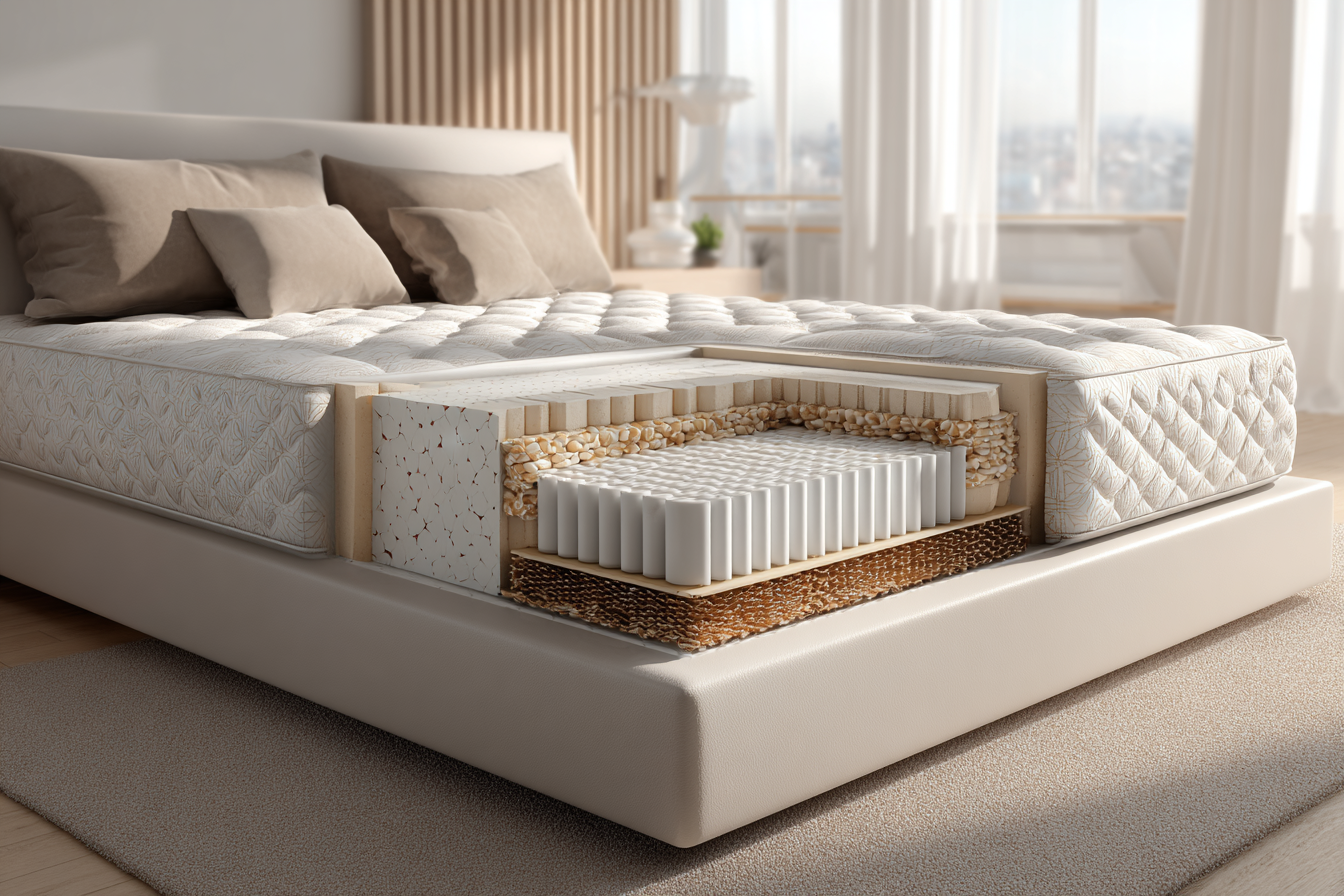
At the heart of every bedroom product is its internal filling, which directly determines the level of cushioning and point elasticity. When analyzing the products available on the market, models made of modern polyurethane materials deserve special attention. Polyurethane cores, including advanced ones thermoelastic memory foam (visco) and highly elastic (HR), are renowned for their incredible ability to conform to the natural curves of the spine. Under the influence of body temperature and pressure, this mattress perfectly reduces pressure points, which significantly improves blood circulation and eliminates the need to constantly change positions during the night.
Spring systems based on independent pockets (multipocket) are distinguished by entirely different performance characteristics. In such designs, each steel spring is housed in a separate fabric cover, allowing it to flex only under direct pressure. This ensures excellent point elasticity, ideal for couples – One person’s movements are not transferred to the other side of the bed. For customers who are undecided, hybrid models—which combine the stability of pocket springs with the softness and comfort of foam layers—offer the best compromise. On the other hand, people struggling with respiratory issues should consider latex mattresses. Latex provides a natural protective barrier against microorganisms, does not absorb dust, and is widely recognized as the most hygienic material on the market.
Understanding Hardness Ratings – How to Choose a Mattress Based on Your Body Weight?
Choosing the right mattress firmness is a crucial step that determines whether our spine receives proper orthopedic support. Incorrectly chosen firmness can lead to chronic back pain, numbness in the limbs, and a feeling of fatigue in the morning. Manufacturers use a universal four-level scale that makes it easier to match the product to the user’s body weight. When browsing the selection, it’s worth checking out the full catalog presented by trusted bedroom mattresses, in order to carefully compare the various technical specifications.
For simplicity, we can divide the entire hardness scale into four main segments:
- H1 soft mattresses – designed for people with a slender build whose weight does not exceed 60 kg, providing a gentle, snug fit.
- H2 medium-soft mattresses – the most versatile solution designed for users in this weight range 60 to 80 kg.
- H3 medium firm mattresses – designed for people who weigh 80 to 100 kg, who are looking for more stable support.
- H4 hard mattresses – designed for people with a body weight of over 100 kg, ensuring optimal stiffness without sagging.
Component Durability – How Can You Tell Which Product Won't Deform After a Year?
Purchasing bedroom furniture is a significant financial investment, so it’s only natural for every customer to expect the product to have the longest possible lifespan. However, a mattress’s longevity isn’t determined solely by its attractive appearance or quilted cover, but by the technical specifications of the materials hidden inside. When choosing a foam model, the key indicator is density expressed in kilograms per cubic meter – The higher this parameter, the lower the susceptibility to permanent indentations and deformations under constant pressure.
When it comes to spring-based mattresses, it’s worth paying attention to the thickness and type of wire used to make the coils, as well as the quality of the interlining used to bond the pockets. A good mattress should not change its structure as a result of daily changes in sleeping position. Investing in certified, approved materials Sourced from reputable manufacturers, this ensures that the mattress will retain its elasticity and original contour for many years, without sagging in the hip or shoulder areas.
The Microclimate in the Bedroom – Why Is Proper Air Circulation Essential?
The constant flow of air inside the mattress core is a factor that directly determines the hygiene and freshness of our sleep. During the night, the human body naturally generates heat and moisture, which, in the absence of proper ventilation, penetrate deep into the mattress structure. Creating such a humid environment is the easiest way for health-threatening dust mites, mold, and fungi to thrive, which negatively affect the respiratory tract and can trigger severe allergic reactions.
Modern bedroom systems solve this problem by using special open-cell foam structures and transverse ventilation channels. In addition, pocket-spring models naturally feature empty space between the springs, which facilitates free air circulation with every movement of the user. When buying a mattress, it’s worth checking whether the cover is equipped with special 3D ventilation tape sewn around the perimeter, which acts as a natural air conditioner, drawing excess heat away from the bed.
Sizing – The Golden Rules of Bedroom Design
The final, though equally important, aspect of a successful purchase is carefully selecting the bed’s dimensions to fit the room’s space and the number of users. A bed that is too small will effectively restrict freedom of movement, causing frequent awakenings, while a model that is too large will dominate a small bedroom, creating a feeling of being overwhelmed and making it difficult to move freely around the room. The standard length of most products is 200 cm, which allows a person of average height to lie comfortably.
The width should be chosen based on individual needs. For people who sleep alone, the minimum space required for complete comfort is 80- or 90-cm-wide version. On the other hand, couples looking for a balance between comfort and bedroom size most often choose standard size: 160 x 200 cm, which ensures optimal personal space for both partners. Before making a final decision, be sure to carefully measure the interior dimensions of the bed frame to ensure that the selected mattress It will fit perfectly into the furniture's design.
FAQ – Everything You Need to Know Before You Buy
1. How often should you replace your mattress with a new one?
For hygiene and ergonomic reasons, it is recommended to replace the bedding on average every 7 to 10 years. Even the highest-quality components lose their original point elasticity over the years, and microscopic organic contaminants accumulate inside the insert, despite regular washing of the cover.
2. Does using a frame affect the cartridge's lifespan?
Yes, a properly selected frame with flexible wooden slats is absolutely required for the bed to function properly. It not only absorbs additional stress, reducing the risk of deformation, but above all, it allows air to circulate freely from underneath the bed.
3. What are the risks of sleeping on a surface that is too hard or too soft?
A surface that is too hard exerts strong pressure on the blood vessels and hips, forcing you to constantly change positions and causing morning muscle numbness. Conversely, a mattress that is too soft causes the spine to curve unnaturally (the so-called “hammock effect”), which leads to severe, chronic pain in the lumbar region.
Summary – An Informed Decision to Protect a Healthy Spine
Choosing a durable and comfortable mattress should not be left to chance or based on a temporary sale. A careful assessment of your own needs, an understanding of the differences between foam and spring technologies, and a precise selection of firmness based on your body weight are the only way to ensure satisfaction for years to come. By keeping in mind the importance of effective ventilation and the right dimensions, we can be sure that the mattress we choose will serve as the foundation for a restful night’s sleep, protecting our spine and ensuring we wake up feeling great every morning.