Choosing a lounge furniture for the living room is a decision that affects both the comfort of daily use and the interior design. The two most popular solutions are sofa i corner. Both have their advantages, disadvantages and uses, and the choice depends on the size of the living room, the style of the interior, the number of household members and individual preferences.
In this article we will present detailed comparison of sofas and corners, we will discuss their functions, dimensions and arrangement in different types of interiors, as well as give tips on how to choose the perfect piece of furniture for the living room.
What is the difference between a sofa and a corner sofa?
Sofa
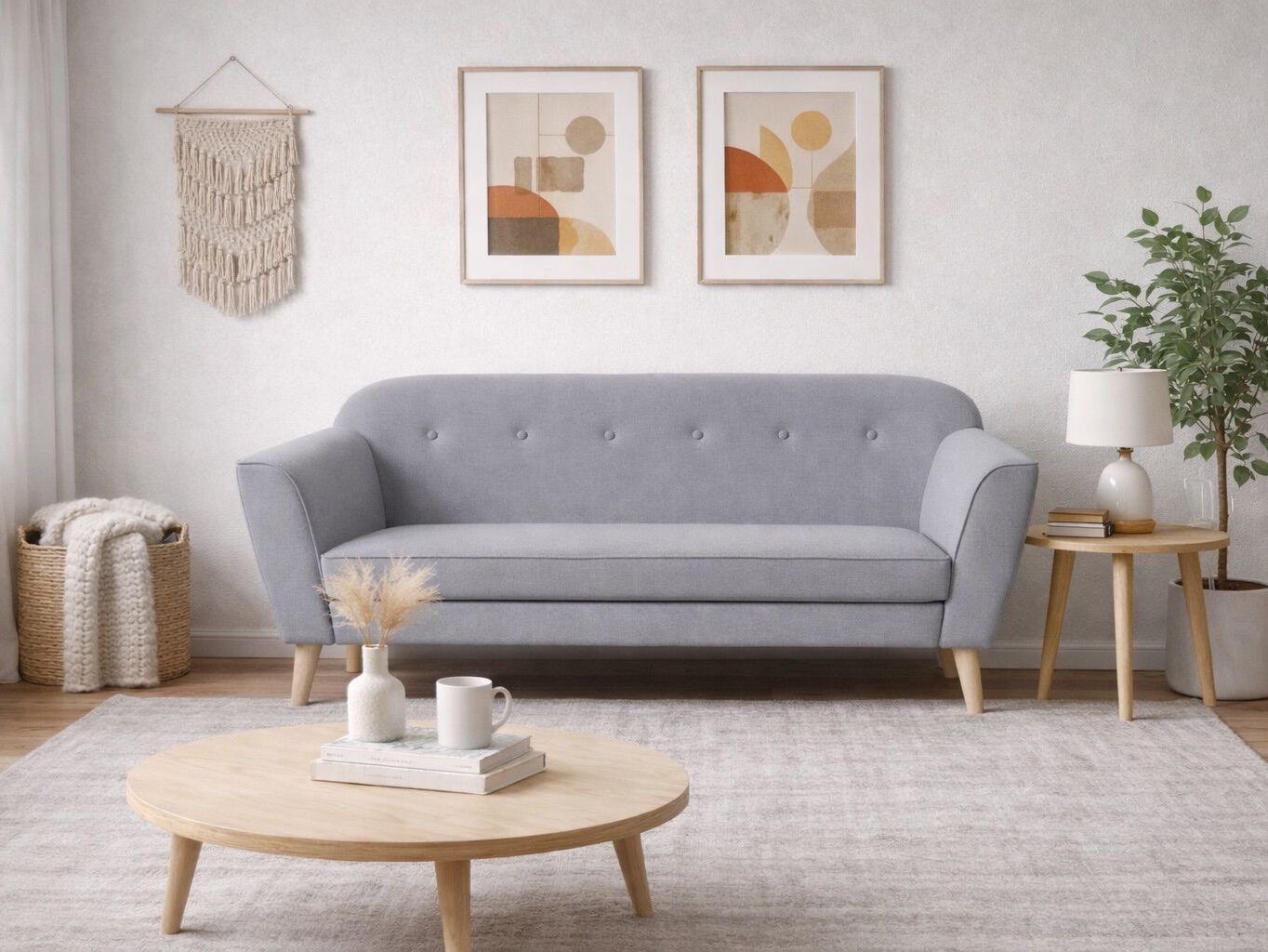
The sofa is traditional lounge furniture, which usually seats 2–3 people. Key features:
A simple form that is easy to match with different interiors.
Available in a variety of sizes and styles—from classic upholstered pieces to modern, minimalist designs.
It can be folded out, acting as a bed for guests.
Usually smaller than a corner, which makes it practical for smaller living rooms.
Corner
The corner is a larger L-shaped piece of furniture, which allows more people to sit or lie down comfortably. Features:
It takes up more space, but takes advantage of the corners of the room.
Ideal for families or people who often receive guests.
Often equipped with a sleeping function and a bedding container.
Available in different variants: with adjustable headrests, reclining seats or modular, which allows you to adjust the corner to fit the space.
Advantages and disadvantages of sofas
Advantages of sofas:
Compact dimensions - perfect for small living rooms or family rooms.
Ease of setup - Its rectangular shape makes it easy to place the piece of furniture anywhere.
Variety of styles - From classic to modern, it complements a wide variety of interiors.
Often a lower price - A sofa usually costs less than a corner sofa with similar specifications.
Sleeping function - Many models fold out, allowing them to be used as a guest bed.
Sofa drawbacks:
A smaller seat area—less comfortable for more people.
Less space for a large family—it's harder to fit everyone in the house.
Fewer storage options—rarely equipped with a linen closet.
Advantages and disadvantages of corners
Advantages of corners:
Larger seating area - Perfect for families and larger groups.
Use of the room angle - Corner sofas make good use of the space and optimize the living room layout.
Sleeping function - Most corner sofas have a fold-out seat and a storage compartment for bedding.
Comfort and relaxation - The long side of the corner sofa lets you lie down comfortably and relax.
Modularity and different variants - You can customize the corner sofa to fit the dimensions of your living room and the needs of your household.
Corner defects:
They take up a lot of space—they won't work in very small living rooms.
A more challenging layout—when rearranging the furniture, a corner sofa may limit your flexibility in arranging the pieces.
It costs more than a sofa—the larger size and additional features affect the price.
How to choose a sofa or corner sofa for the size of the living room?
Small living room
Sofa It's the best choice—it takes up less space and allows for flexible space planning.
It is worth choosing models sliding With bedding storage to increase functionality.
Bright colors and light legs will optically enlarge the interior.
Medium living room
You can choose sofa or smaller corner - It all depends on the number of people in your household and your preferences.
The modular corner allows you to flexibly adjust the layout of the furniture.
Large living room
Corner It's the best choice—it offers more seating space and a place for the whole family to relax.
In addition, a sofa or armchair can be set up to complement the arrangement.
It is worth choosing a corner sofa with a sleeping function and a bedding container.
Choice of style and upholstery
Sofa
Available in classic, minimalist and modern variants.
Upholstery: fabric, velour, and eco-leather—easy to clean and durable.
Color scheme: neutral colors optically enlarge small rooms, vivid colors add character.
Corner
Modular corners allow you to adjust to the size and shape of your living room.
Upholstery should be durable and easy to clean, especially in families with children.
It is advisable to choose colors that match the style of the living room and do not overwhelm the space.
Additional features
Unfolding for sleeping - Both the sofa and the corner sofa can be used as beds.
Bedding container - A corner sofa usually offers more storage space, while a regular sofa offers less.
Adjustable headrests and armrests - They enhance comfort and allow you to customize the furniture to suit your needs.
Modularity of the corner - the ability to rearrange the components as needed.
Practical tips for choosing
Change the proportions of your living room - Measure the space carefully to ensure that the sofa or corner sofa fits well.
Determine the number of people - Choose a sofa for 2–3 people or a corner sofa for your family and guests.
Consider the sleeping function - If you plan to use the piece of furniture as a bed, check the folding mechanism.
Match the style and color - The piece of furniture should blend in with the interior design.
Check the quality of materials - Durable upholstery and a sturdy construction ensure a long service life.
Summary
The choice between sofa vs corner sofa depends on The size of the living room, the number of household members, functionality and style preferences.
Sofa - Ideal for small and medium-sized living rooms; compact; easy to arrange; often a sofa bed; more economical.
Corner - Perfect for large living rooms and families, with a larger seating area, a sleeper function, a storage compartment for bedding, comfortable relaxation, and an elegant design.
When choosing, it is worth taking into account the proportions of the room, the style of the arrangement, additional functions and the comfort of daily use. Both the sofa and the corner sofa can be the focal point of the living room, if they are well chosen for the space and the needs of the household.